Company
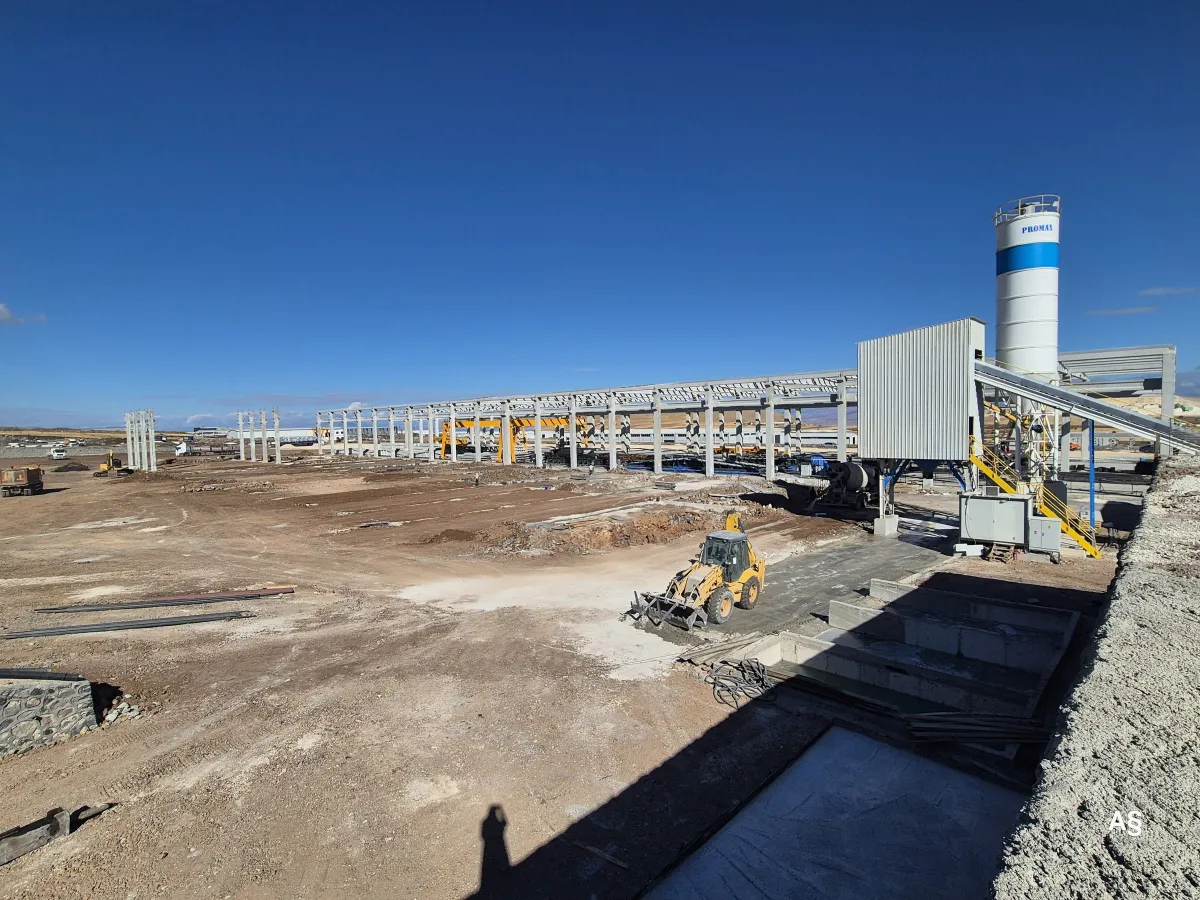
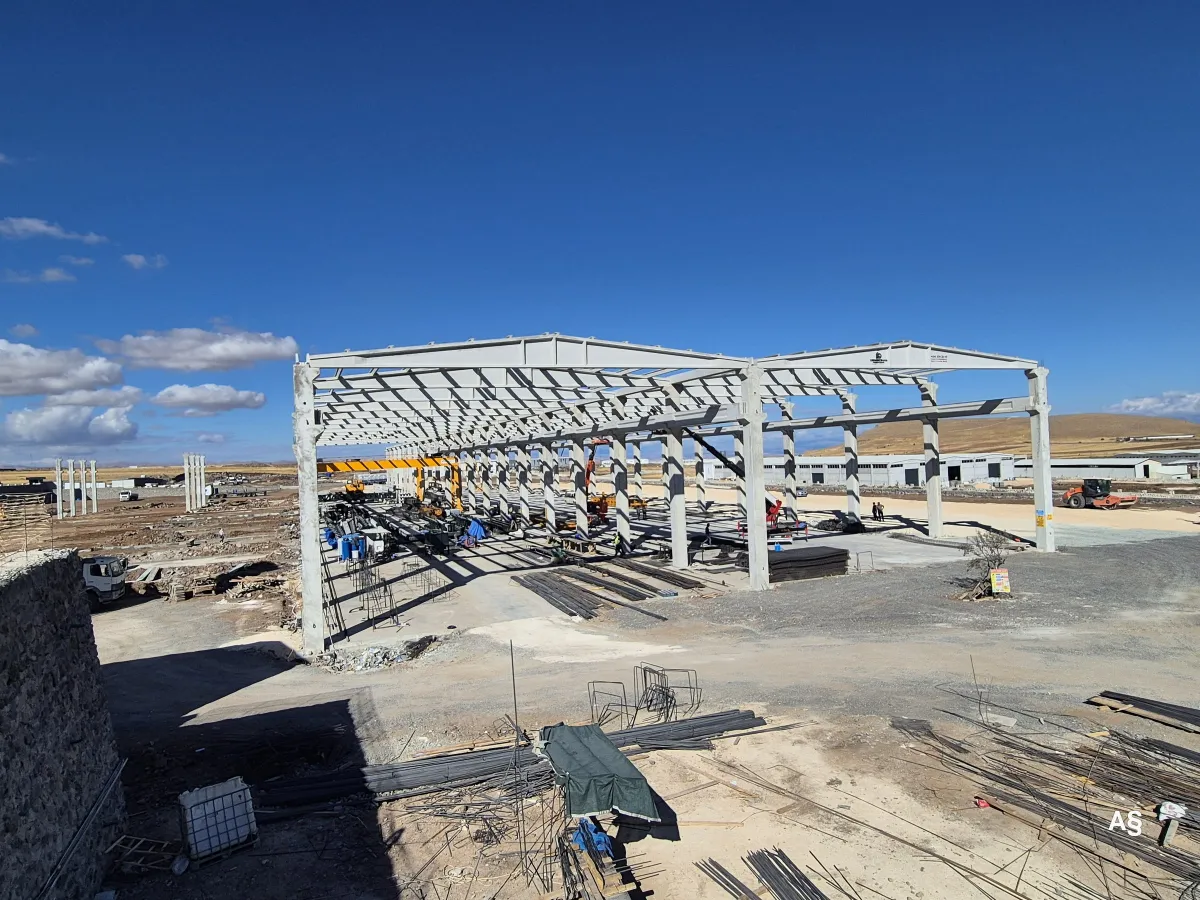
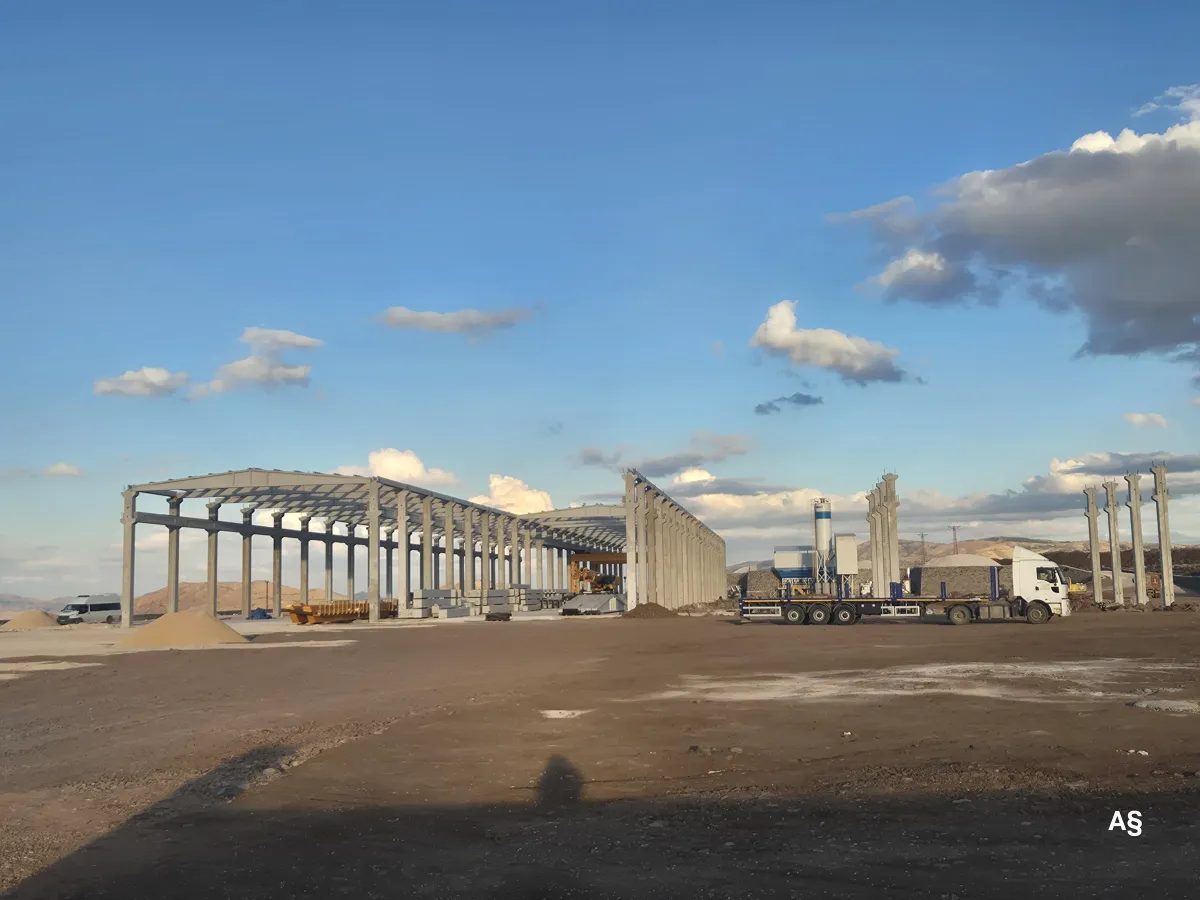
Our precast production facility in Teknova OSB, Elazığ
At our facility in Teknova OSB, Elazığ, we produce precast reinforced concrete columns, beams, roof trusses and other precast elements for industrial buildings. Here is the facility, its products and the production flow.
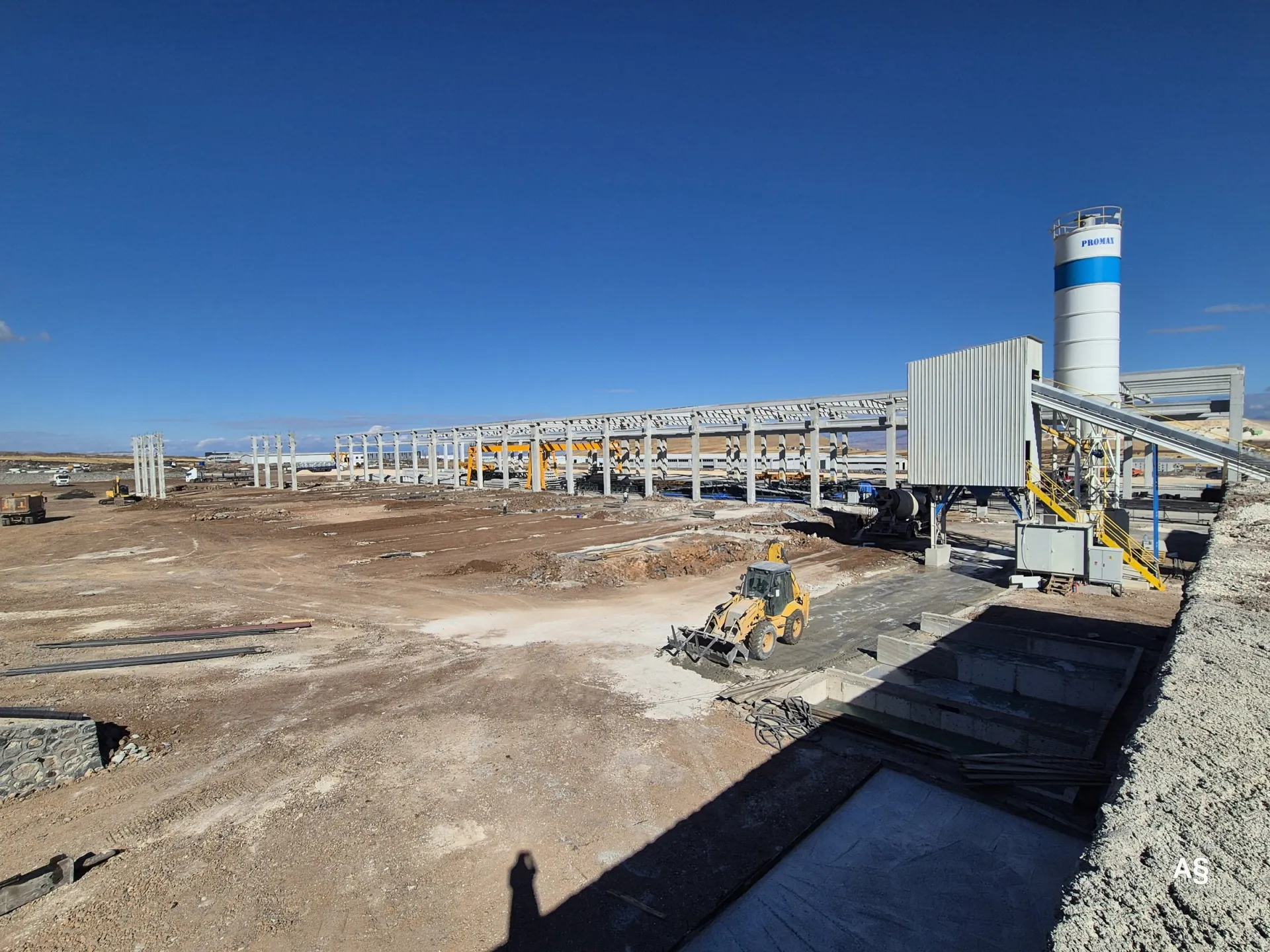
The Demircihan Prefabrik production facility is a precast concrete plant in Teknova Organized Industrial Zone (OSB), Elazığ, that produces precast reinforced concrete columns, beams, roof trusses and a range of other precast building elements for industrial buildings. The facility is our group's investment in prefabricated and precast construction, building on work in construction and infrastructure since 1998.
This article explains where the facility is, which elements it produces, how precast production generally works, and how our group's experience with a concrete batching plant, a quarry and a machinery fleet carries into this production.
Where is the facility?
Our production facility is located in Teknova OSB, one of Elazığ's new organized industrial zones. Our head office is at Ataşehir Mahallesi, Şehit Üstteğmen Ali Çalışkan Sokak No:3/1, Merkez, Elazığ, Turkey.
Precast elements are large, heavy products, and the distance from the plant to the site directly affects transport time and cost. A production facility in Elazığ offers an advantage in this respect for industrial and warehouse investments in Elazığ and the wider Eastern Anatolia region.
What do we produce?
The facility produces the precast elements that make up the structural frame of industrial buildings:
| Element | Role in the building |
|---|---|
| Precast column | Vertical member that carries roof and beam loads to the foundations. In buildings with overhead cranes, the corbels that support the crane beams are cast together with the column. |
| Precast beam | Horizontal member that carries loads between columns. |
| Roof truss | Sloped main roof member that covers wide spans without intermediate columns. |
| Purlin | Secondary member laid across the trusses to support the roof cladding. |
| Gutter beam | Beam that collects rainwater from the roof while also acting as a structural member. |
| Special elements | Precast parts made to project-specific dimensions and shapes. |
Element dimensions and sections are determined by each project's structural design. For up-to-date information on production capacity and the range of dimensions the plant can produce, please contact our technical team.
How does precast production work?
Precast production moves the work that cast-in-place concrete requires on site into factory conditions. The general sequence is as follows:
- Mould preparation: A steel mould is set up to the element's dimensions, cleaned and coated with release agent.
- Reinforcement: The reinforcement cage, prepared to the design, is placed in the mould with spacers that ensure the concrete cover. Lifting loops, anchors and connection hardware are positioned at this stage.
- Casting: Concrete is poured into the mould and compacted by vibration so that no voids remain.
- Curing: The concrete is kept at controlled moisture and temperature until it reaches demoulding strength.
- Demoulding and storage: The element is removed from the mould, numbered and stored in the yard according to the delivery sequence.
- Delivery and erection: Elements are sent to site in the order of the erection plan and lifted into place by crane.
Reusing the same mould set-up again and again improves dimensional repeatability, and the elements arrive on site ready for erection.
Quality control points in precast production
In precast production, quality is checked at every stage, not only in the finished product. In general practice, the control points are as follows:
| Stage | What is checked |
|---|---|
| Mould | Dimensions, edge and surface accuracy, cleanliness |
| Reinforcement | Bar diameter, number and spacing; concrete cover; position of cast-in items |
| Concrete | Consistency and temperature; samples taken for compressive strength testing |
| Demoulding | Concrete has reached sufficient strength for lifting |
| Storage | Stacking on timber bearers at the correct support points; surface and edge damage |
| Delivery | Element number, erection sequence, secure fastening to the vehicle |
Each element's number provides traceability from production to erection: if an issue arises on site, it can be traced back to the mould and the pour in which the element was produced.
Storage yard and deliveries
Precast elements are designed for specific support conditions. In the storage yard, therefore, elements are stacked on timber bearers only at the points specified in the design; a beam supported at the wrong points or lifted the wrong way up can crack. Deliveries follow the same rule: elements are loaded in erection order and on the correct supports, so that no unnecessary re-handling is needed on site.
What kinds of buildings do we produce for?
Our elements are used in the structural frames of factories, warehouses, production facilities and other industrial buildings. We also offer turnkey industrial building solutions by managing the process from design to erection.
Running production and erection under one roof gives the investor a single point of contact: a change to the element schedule is reflected in both the production and the erection plan at the same time, and responsibilities are clearly defined.
Advantages of factory production
- Controlled environment: Formwork, reinforcement and concreting are carried out independently of site weather.
- Parallel progress: Elements are produced at the factory while foundations are built on site, shortening the overall programme.
- Repeatable quality: Elements cast in the same mould are consistent in dimensions and surface finish.
- Fast erection: Elements arrive ready and are lifted into place by crane in a short time.
Standards and technical framework
The main standards used in Turkey for precast concrete products are TS EN 13369, which sets the common rules for precast concrete products, and TS EN 13225, which covers linear structural elements such as columns and beams. Concrete is specified to TS EN 206, reinforced concrete design follows TS 500, and seismic design follows the Turkish Building Earthquake Code (2018). We are guided by technical discipline and a modern approach to manufacturing at every stage of production.
The experience behind it: batching plant, quarry and machinery fleet
The facility in Teknova OSB is not a venture starting from scratch. Our group's active concrete batching plant, quarry and extensive machinery fleet have supported our infrastructure and building projects since 1998. This experience with concrete, aggregates and heavy equipment gives precast production a materials and logistics base that we know well.
In our Chairman's words
“We see DEMİRCİHAN Prefabrik not merely as a production facility, but as a strong industrial investment that brings together engineering, quality and trust.” — Hakan Özdemir, Chairman of the Board
Contact us
For an element schedule, a production timeline or a quotation for your project, call our head office on +90 424 236 25 40, reach us on WhatsApp at +90 532 069 99 23, or email [email protected].
Frequently asked questions
Can you produce elements to project-specific dimensions?
Yes. The dimensions of columns, beams and roof elements are already set by each project's structural design; non-standard shapes are handled within the special elements in our product range.
Do you also carry out erection?
Yes. Our professional team carries out erection for factories, warehouses and industrial buildings.
How long does it take to produce the elements for a project?
It depends on the number of elements, the mould set-up and the time the concrete needs to reach demoulding strength. For a project-specific production schedule, please talk to our technical team.
Which concrete class are the elements made with?
There is no single concrete class; it is set in the structural design according to the loads the element will carry and the environmental conditions it will be exposed to, and specified in accordance with TS EN 206.
How does a precast building comply with the earthquake code?
Compliance is achieved by designing the elements, and especially the connections, to the rules the Turkish Building Earthquake Code sets for precast buildings. Production and erection are then carried out exactly to that design.