What is a precast concrete safety barrier?
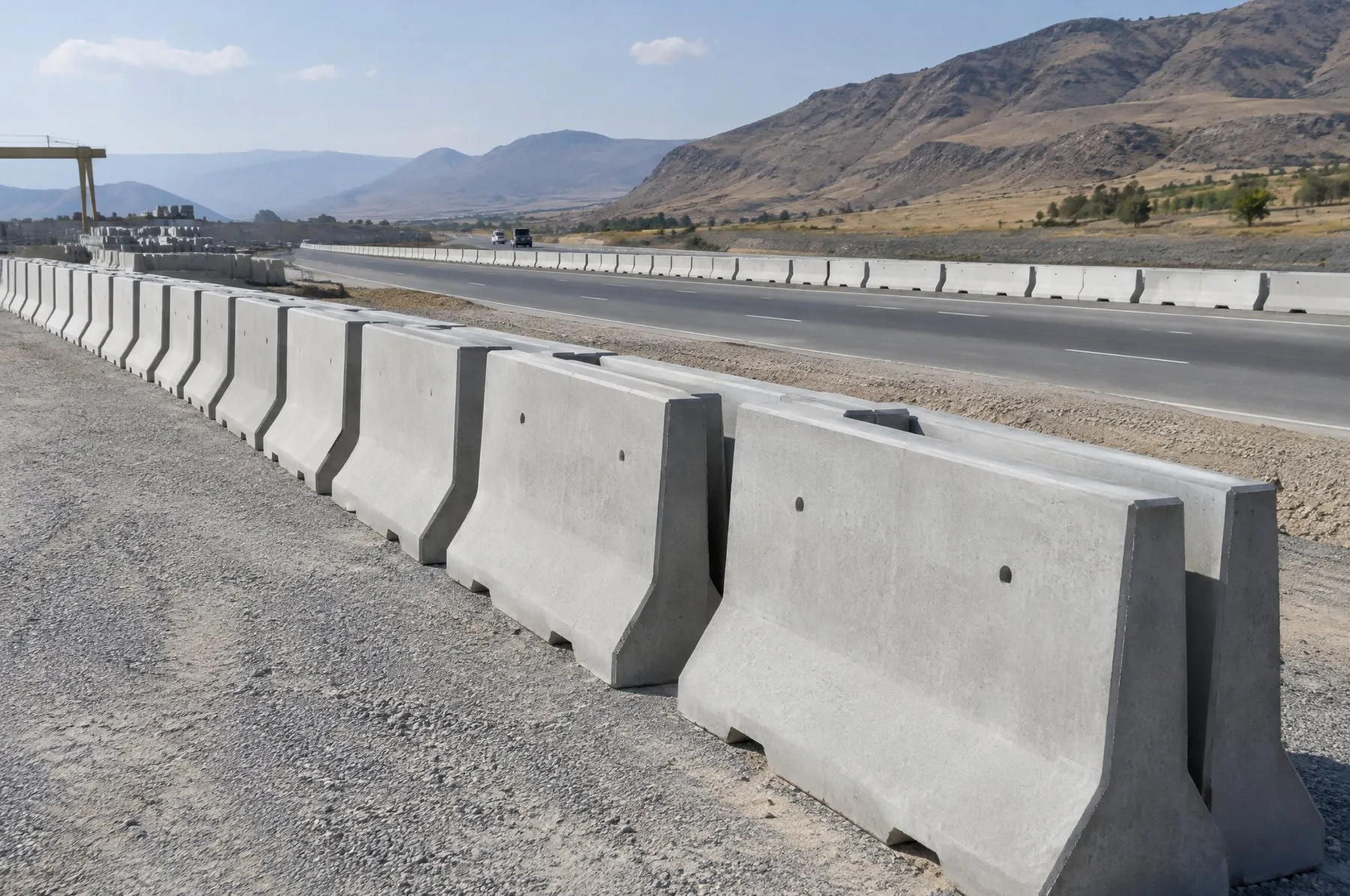
A precast concrete safety barrier is a road restraint system made up of precast concrete units, produced in the plant in set lengths, then placed end to end on site and connected together. Its purpose is to redirect an errant vehicle and stop it crossing into the opposing carriageway, leaving the road or entering a protected area.
Where it is used and what it does
Barriers are installed permanently in the central reserves of dual carriageways, on bridge approaches, on high embankments and on sharp bends. During road construction and maintenance they are placed temporarily to separate traffic from the work zone. At industrial sites, public buildings and car parks they serve as security elements to control vehicle access and separate areas.
Profile and connection types
The profile of the barrier face governs how a striking vehicle behaves. On the widely used New Jersey profile, the sloping lower face lifts the wheel and helps turn the vehicle parallel to the barrier. Single-slope profiles are less affected by resurfacing, because raising the road level does not change the shape of the face. Units are connected by steel coupling parts at their ends, which spread the impact load to neighbouring units. In Europe the impact performance of barriers used on roads is assessed under the EN 1317 series of standards; the required performance level is set by the road authority's specification.
Production
Barriers are cast in steel moulds in the plant, with the reinforcement cage and connection parts placed before the concrete is compacted by vibration. As they will be exposed to frost, rain and de-icing salts, a concrete mix suited to these conditions is selected. Once cured, units are checked for dimensions, surface finish and the fit of the connection details.
Delivery and installation
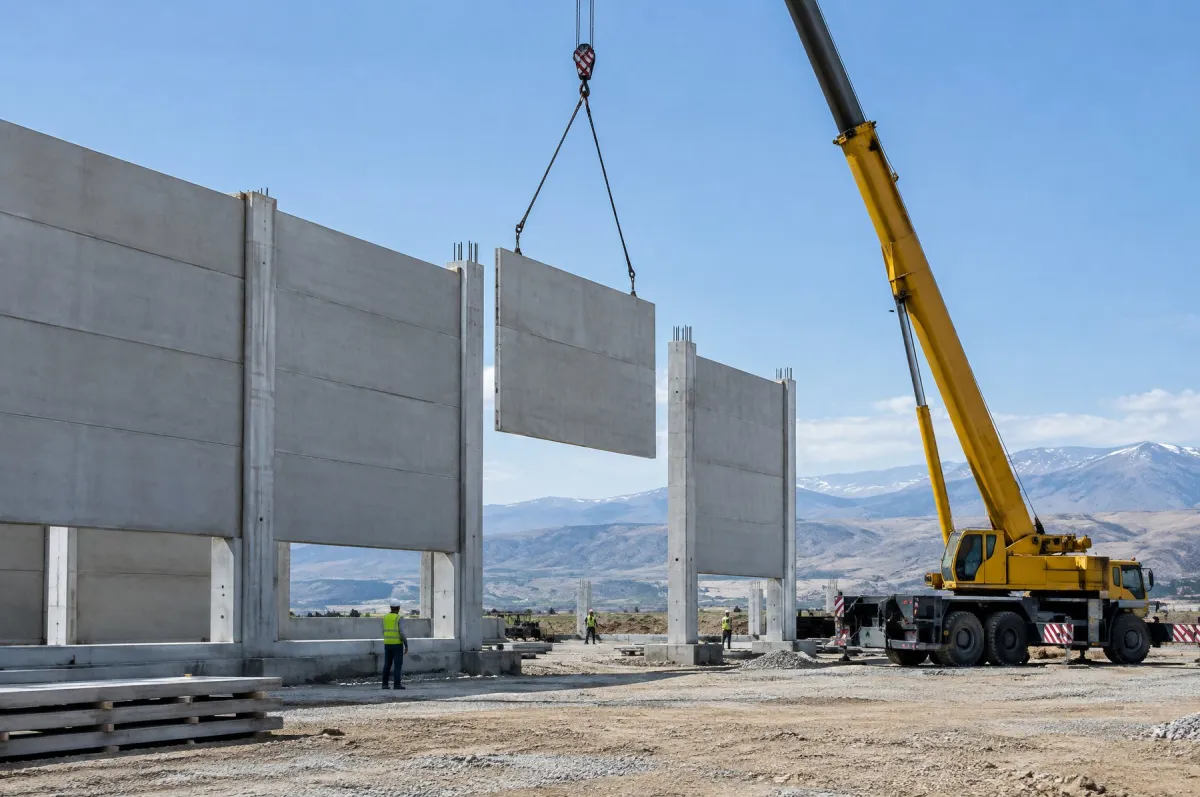
Barriers are delivered by lorry and lifted into line by crane using their lifting loops. Units are connected in sequence, with end treatments at the start and finish of the run. In temporary schemes the barriers can be removed when the work is complete and reused on another site. Reflectors can be fitted to the barrier face to improve visibility at night.
Temporary and permanent use
On permanent barrier lines the units are usually fixed to the ground or a foundation and stay in place for many years. On temporary lines the barriers are placed free-standing and repositioned by crane as the work zone moves on. In both cases the end treatments at the start and finish of the run are planned to prevent vehicles from striking the barrier end head-on.