What is a precast concrete pile?
A precast concrete pile is a deep foundation element made in the plant to a set section and length, then driven into the ground on site by a piling rig. Unlike cast-in-place piles, it enters the ground with its concrete already complete and its strength verified. Because it pushes the surrounding soil aside as it is driven, it is classed as a displacement pile.
Its role in a foundation
Where the upper soil is too weak or compressible to carry a structure, piles transfer the load down to firmer strata. Load passes into the ground through resistance at the pile toe and friction along the shaft. Groups of piles are tied together by a pile cap cast on top, so that they share column or wall loads. The arrangement is used to limit settlement and give the structure a secure bearing.
Sections and types
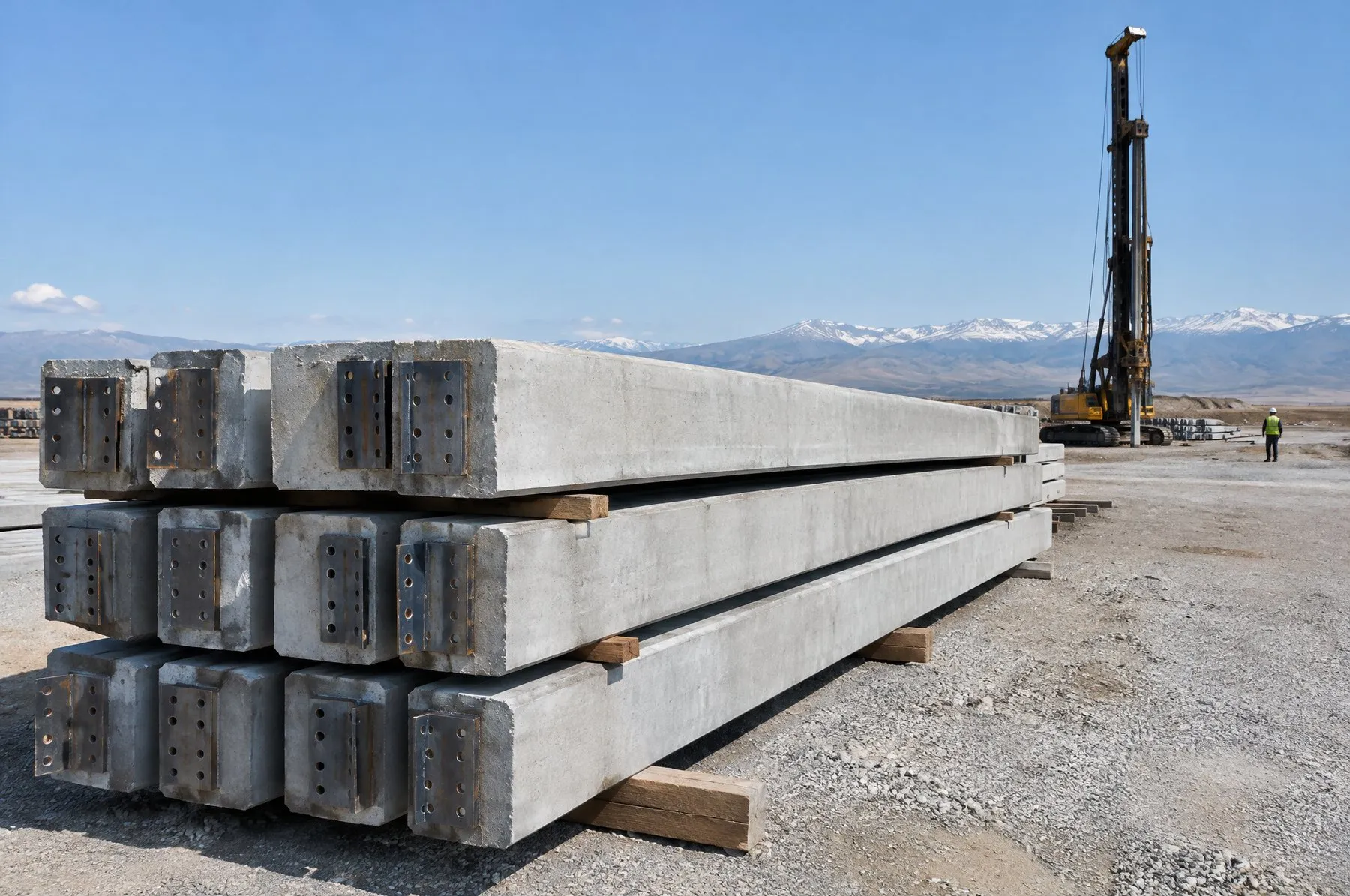
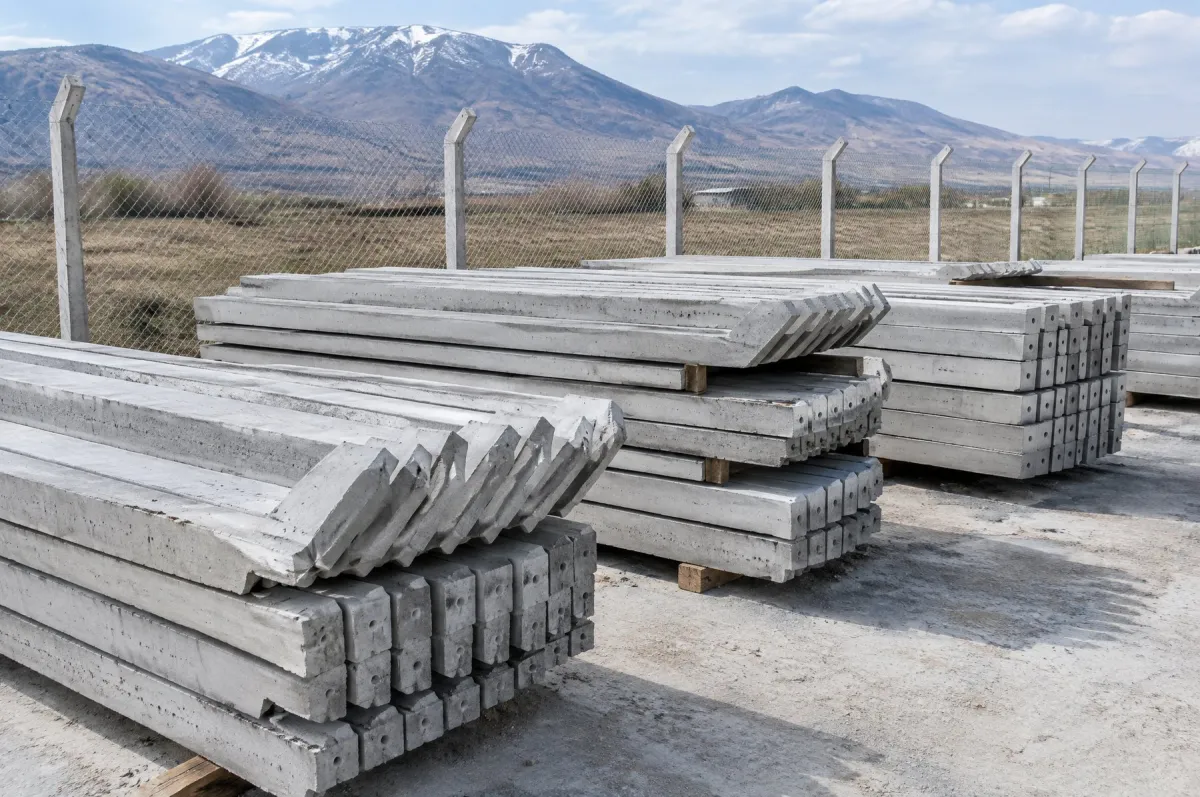
Square is the most common section for precast piles; hexagonal, round and hollow sections are also used. Piles can be made as reinforced or prestressed elements. Pile length follows the depth of the bearing stratum; where a single length would be too long to transport, piles are made in segments that are joined on site with mechanical splices. The toe can be pointed, or fitted with a steel shoe, to help it penetrate hard ground.
Production
Piles are cast in steel moulds with longitudinal bars and surrounding helical or link reinforcement. Confinement steel is placed more closely at the head and toe, which take the highest stresses during driving. The concrete is compacted by vibration and cured under control until it is strong enough to withstand driving. Each pile is checked for dimensions, straightness and a square, even head.
Delivery and driving
Piles are lifted and stacked from designated points chosen to avoid bending damage. On site the pile is raised into the leader of the rig and driven to the target depth by hammer blows. The number of blows and the penetration are recorded for every pile; this driving record gives an on-site indication of capacity and can be backed up by load tests where needed. Once driving is complete, pile heads are trimmed to level and tied in with the pile cap concrete.
Site investigation and pile design
Piled foundation design starts with a site investigation, including boreholes and in-situ testing. The depth of the bearing stratum, the soil type and groundwater conditions determine pile section, length and spacing. Hard layers or cobbles likely to be met during driving are also taken into account when choosing the toe detail and reinforcement.