What is an irrigation flume?
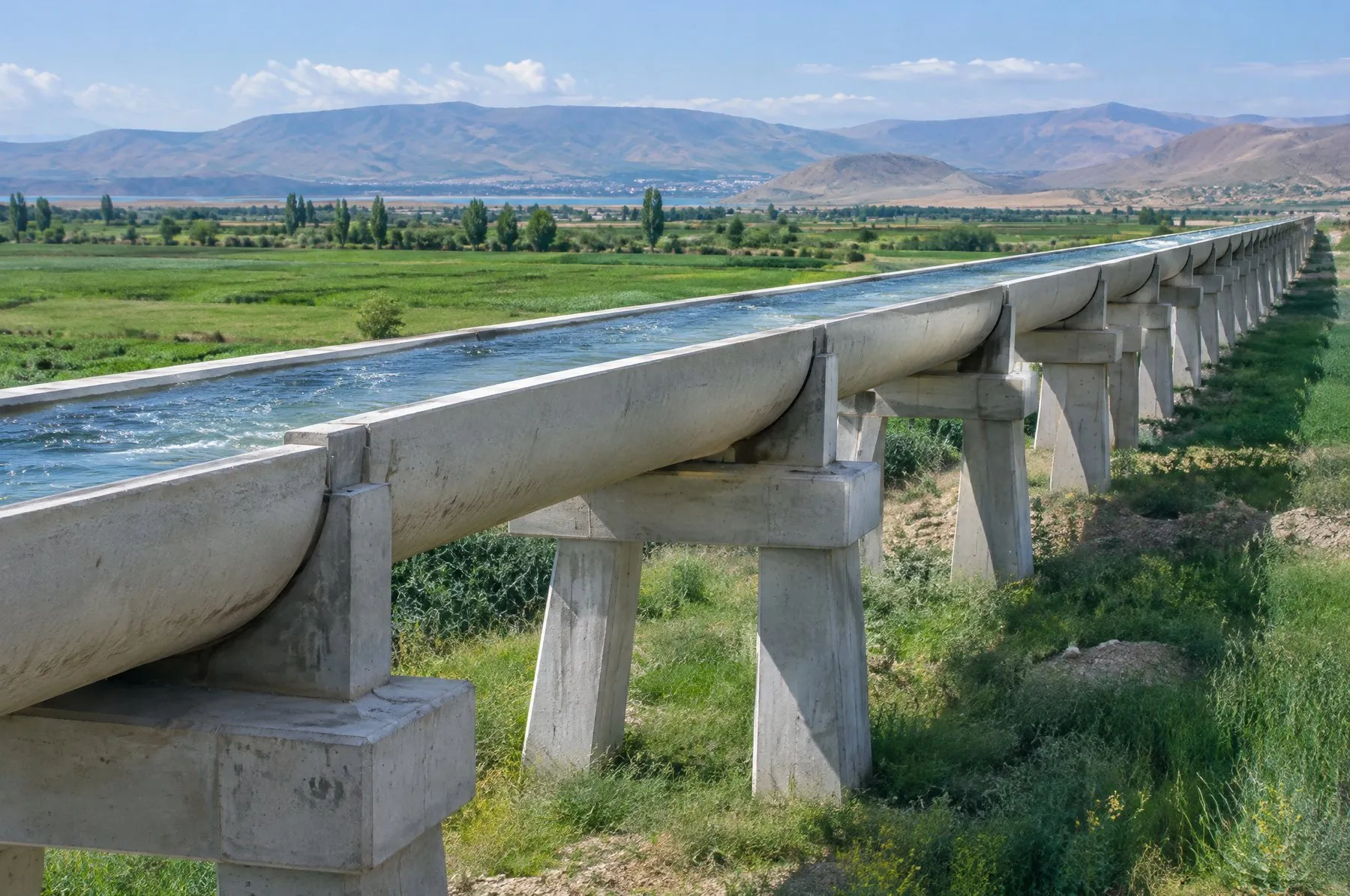
An irrigation flume is an open precast concrete channel unit that distributes water from main and secondary canals to the fields in an irrigation network. It is usually made with a thin wall and a rounded section, semi-elliptical or parabolic in shape. Units are joined end to end to form irrigation lines that can run for many kilometres.
Its place in an irrigation network
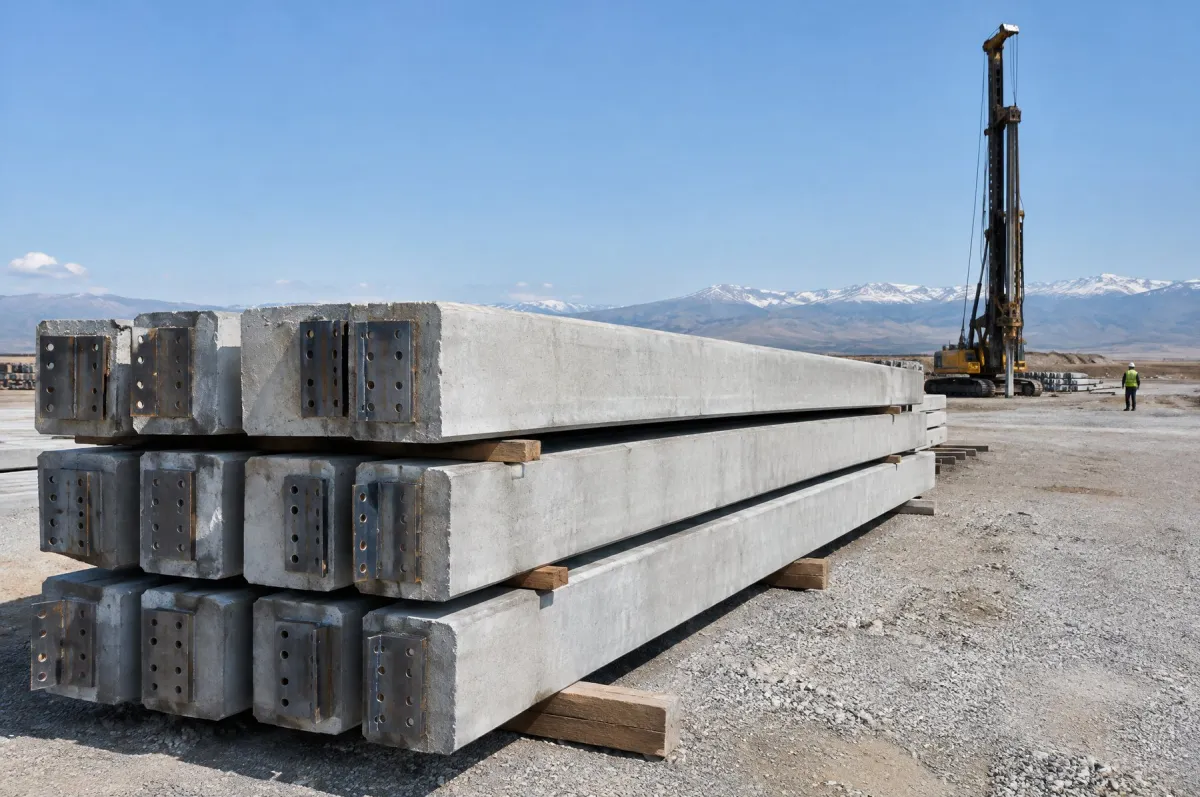
Flumes are usually raised above the ground on precast supports, often called trestles. This allows the line gradient to be set independently of the terrain so that water can reach the fields by gravity. Compared with earth channels, flumes cut seepage and evaporation losses, are easier to maintain and take up less farmland. Water is delivered to the fields along the line through offtakes and weirs.
Types and details
Flumes are made in different section sizes to suit the flow they carry. Larger sections are used at the head of the network and smaller ones towards its ends. A flume line is designed as a system of channel units, supports, support foundations and transition pieces. Section type and dimensions are set in the irrigation design and in the technical specification of the relevant authority.
Production
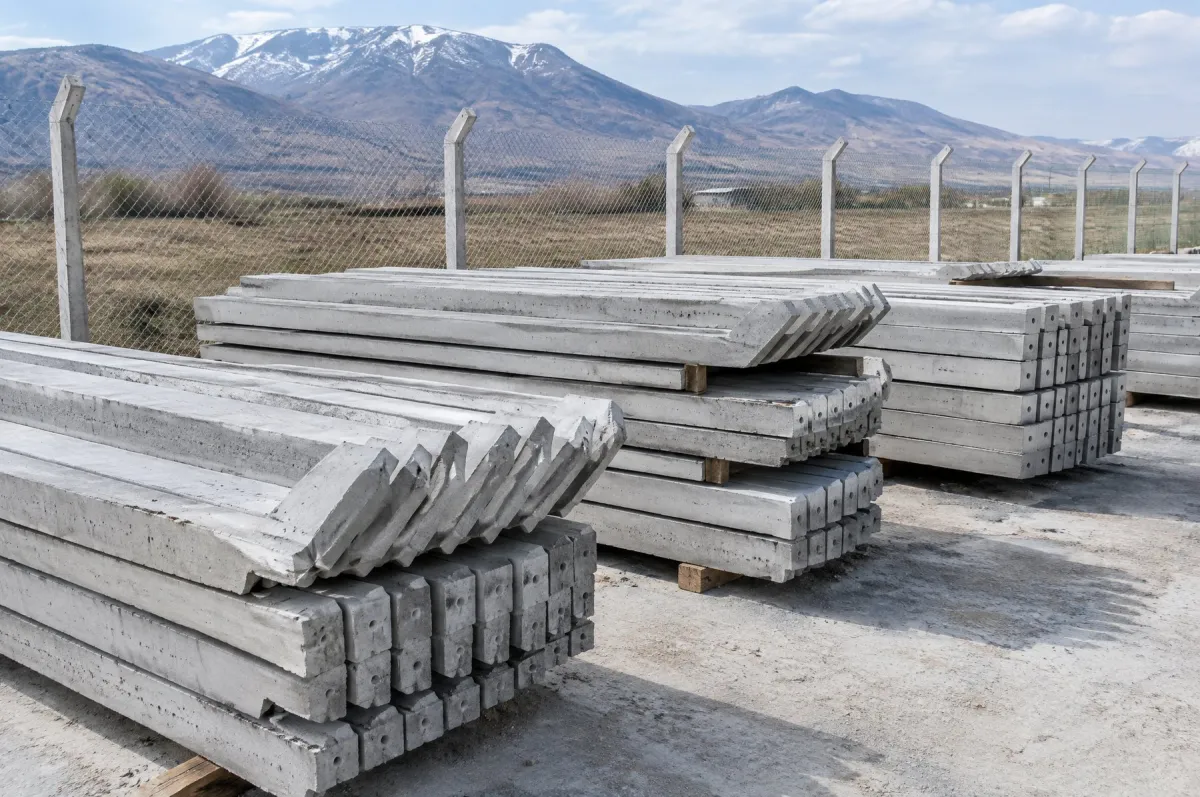
Because of their thin walls, flumes call for a dense, low-permeability concrete. The concrete is placed in steel moulds fitted with mesh reinforcement, compacted by vibration and cured under control. Dimensional accuracy at the ends is checked with particular care, as it governs how well the joints seal, and units with surface cracks or voids are rejected at inspection.
Delivery and installation
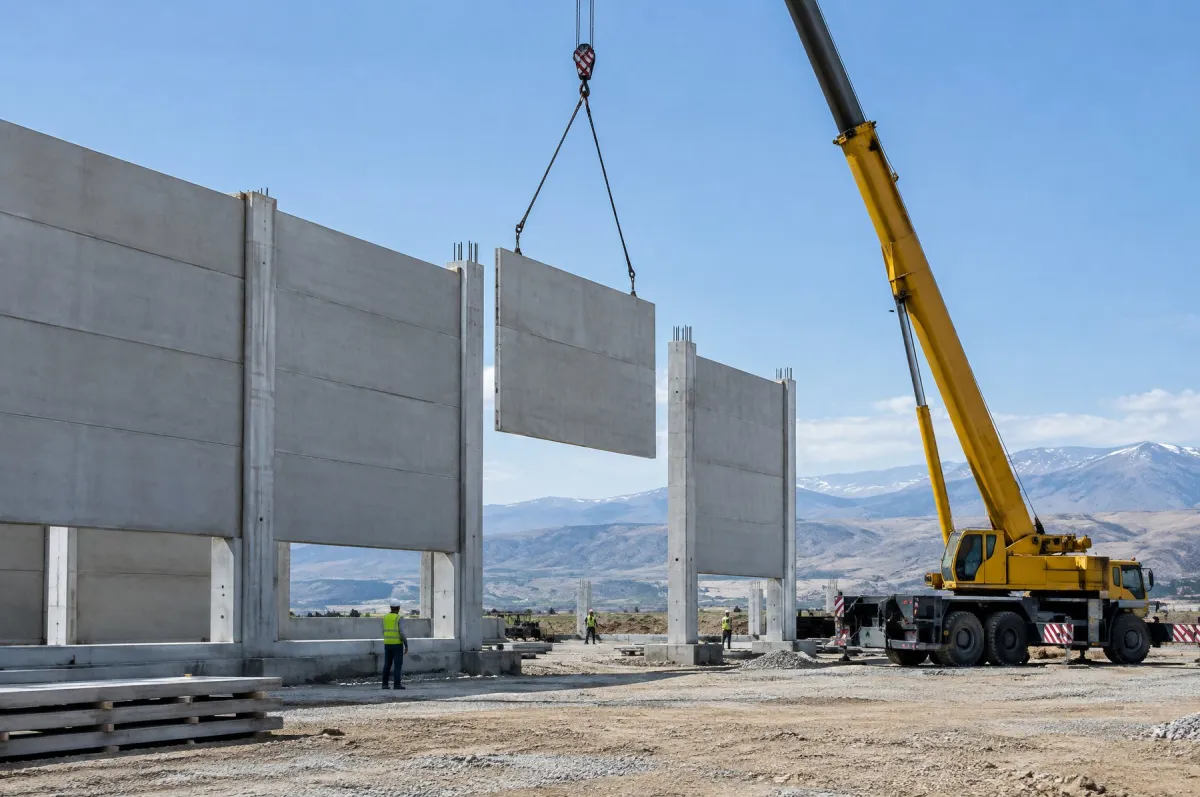
On site, the support foundations and supports are set out first to the levels and gradient in the design. Flume units are lifted by crane onto the supports and joined end to end. Joints between units are sealed with elastic gaskets or sealant. Before the line is put into service, it is filled with water and checked for watertightness and flow. Flumes can be installed quickly outside the irrigation season.
Maintenance and operation
Routine maintenance of a flume line involves checking the joints, supports and offtakes. The open section makes it easy to clear silt and plant debris. A damaged unit can be lifted out and replaced without disturbing the rest of the line.