What is a precast cable trough?
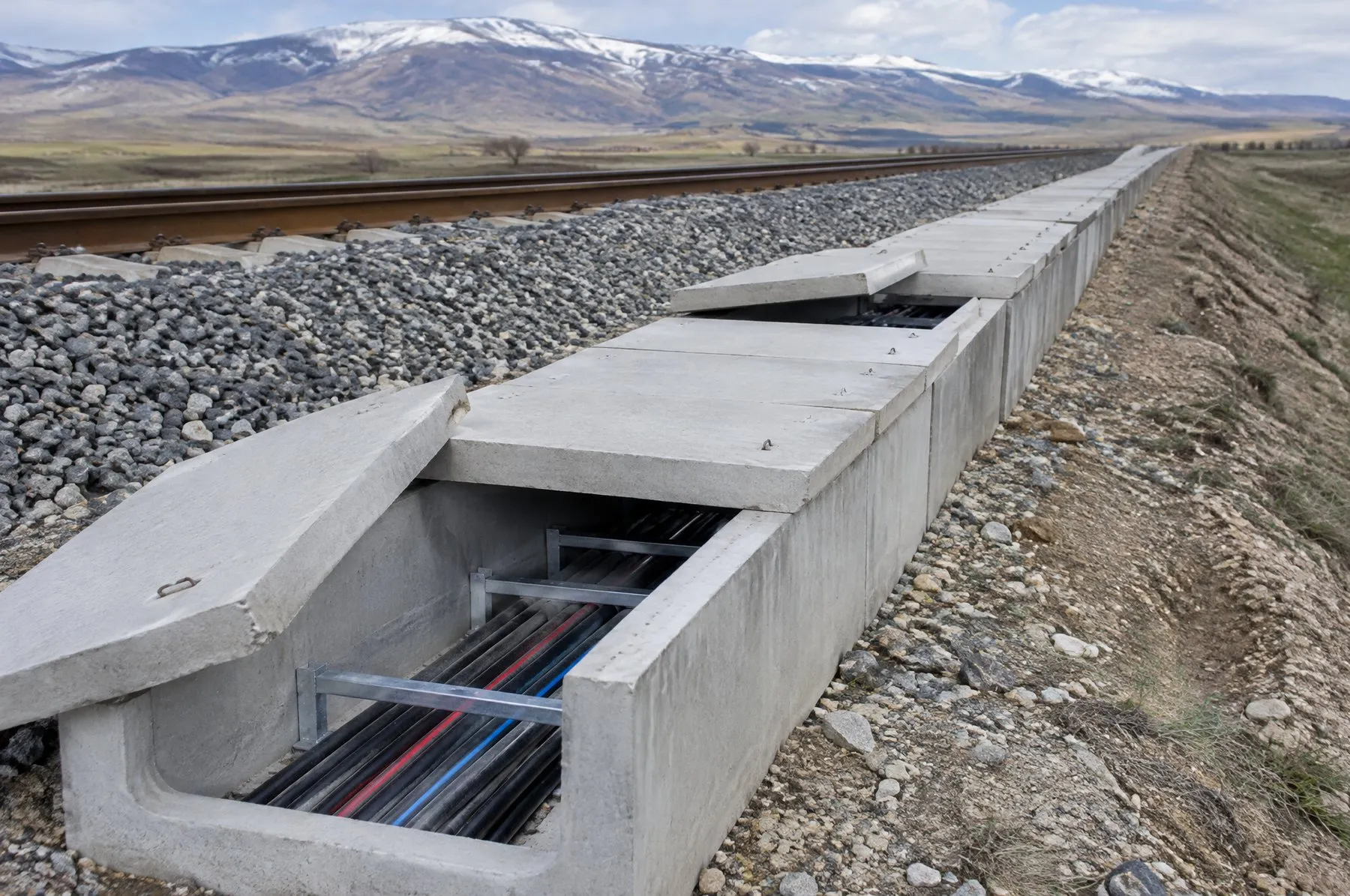
A precast cable trough is a unit used to carry cables along a route close to ground level, made up of a U-shaped concrete body and a concrete lid that sits on top of it. The units are laid end to end to form a continuous cable route.
Role and typical locations
The cable trough protects cables against impact, crushing and other external effects, while keeping the route orderly and easy to trace. Because the cables are not buried directly in the ground, fault finding, maintenance and adding new cables can be carried out by lifting the lids, without excavation. For this reason troughs are widely used for signalling and telecom cables along railway lines, in substations and switchyards, at solar power plants and for on-site cable routes at industrial facilities.
Types and details
The internal width and depth of the trough are chosen to suit the number and size of cables to be carried. Alongside single-compartment troughs, divided sections can be produced to keep different cable groups apart. Lids are designed with different thicknesses and reinforcement depending on whether pedestrians or vehicles will cross them. Bends, junctions and road crossings along the route may need special units. Dimensions and reinforcement are set to the project and its needs.
Production
Because cable troughs are repeated in large numbers with the same section, they lend themselves to series production. Bodies and lids are cast in separate moulds, compacted and cured under controlled conditions. The dimensional accuracy of the end faces and lid seats is checked, so the units form a true line when laid and the lids sit firmly.
Delivery and installation
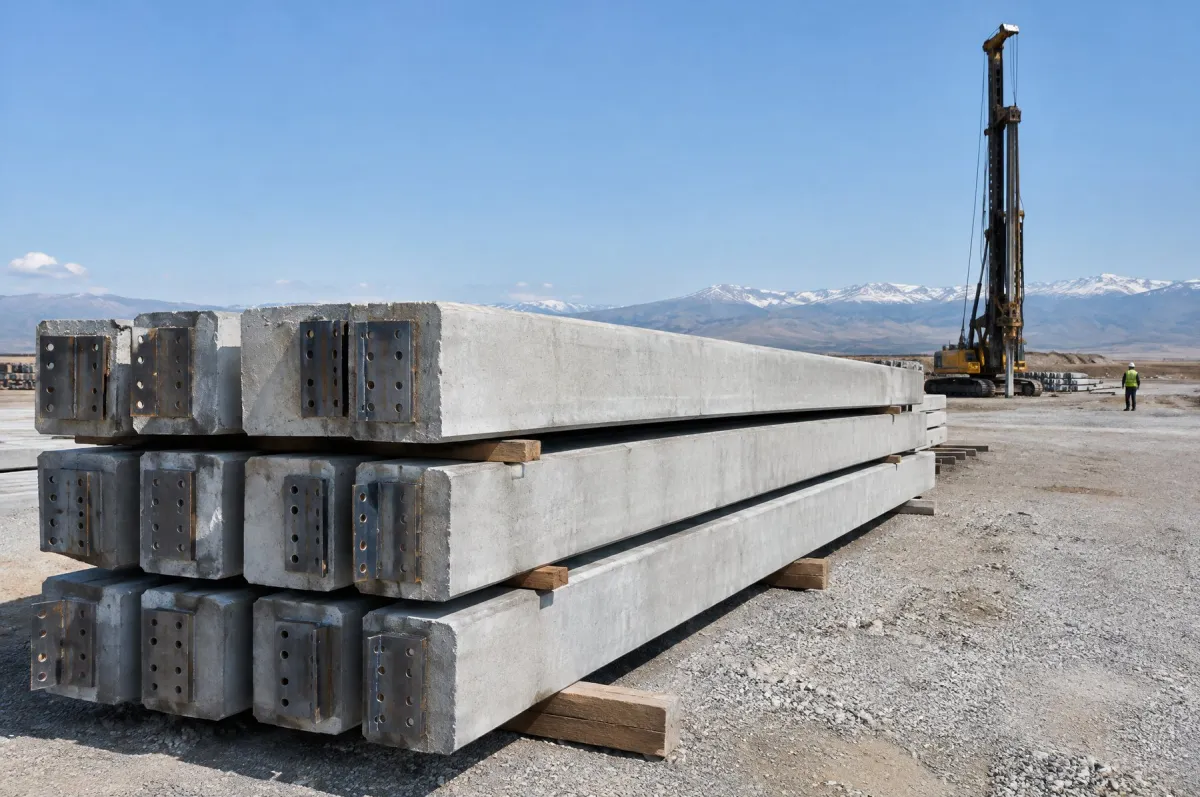
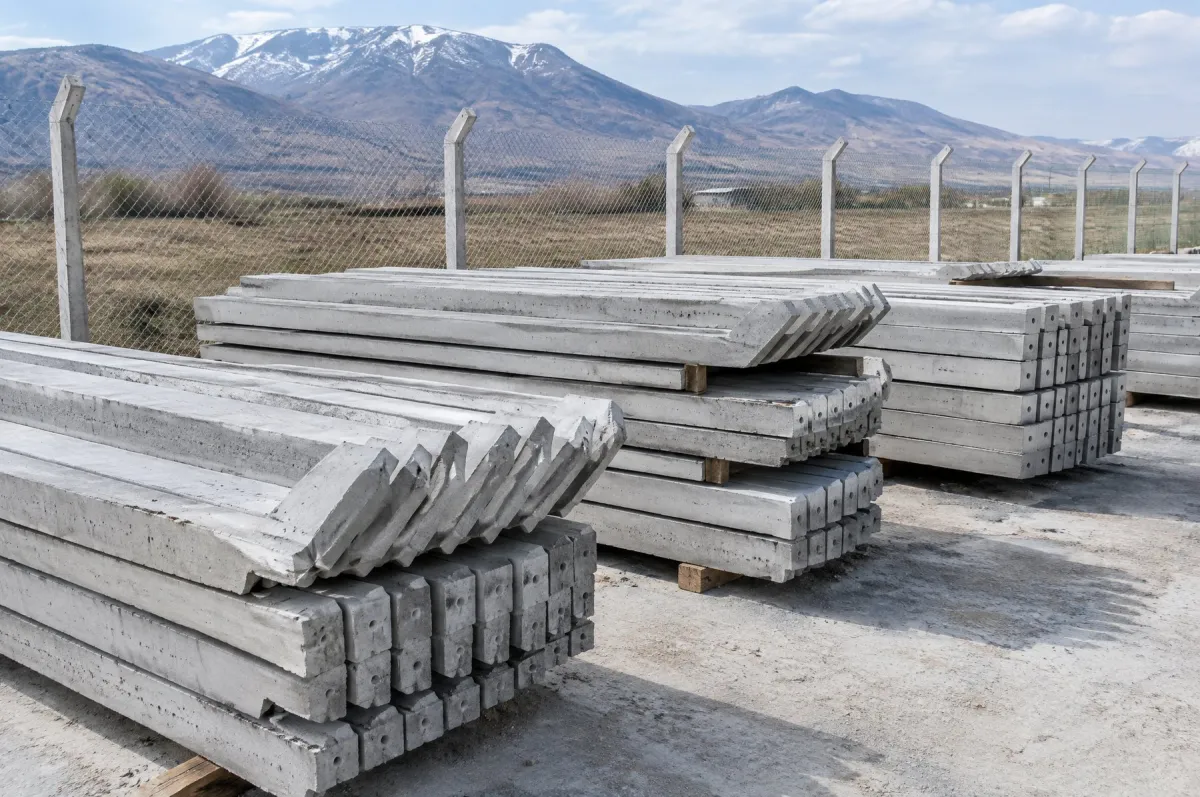
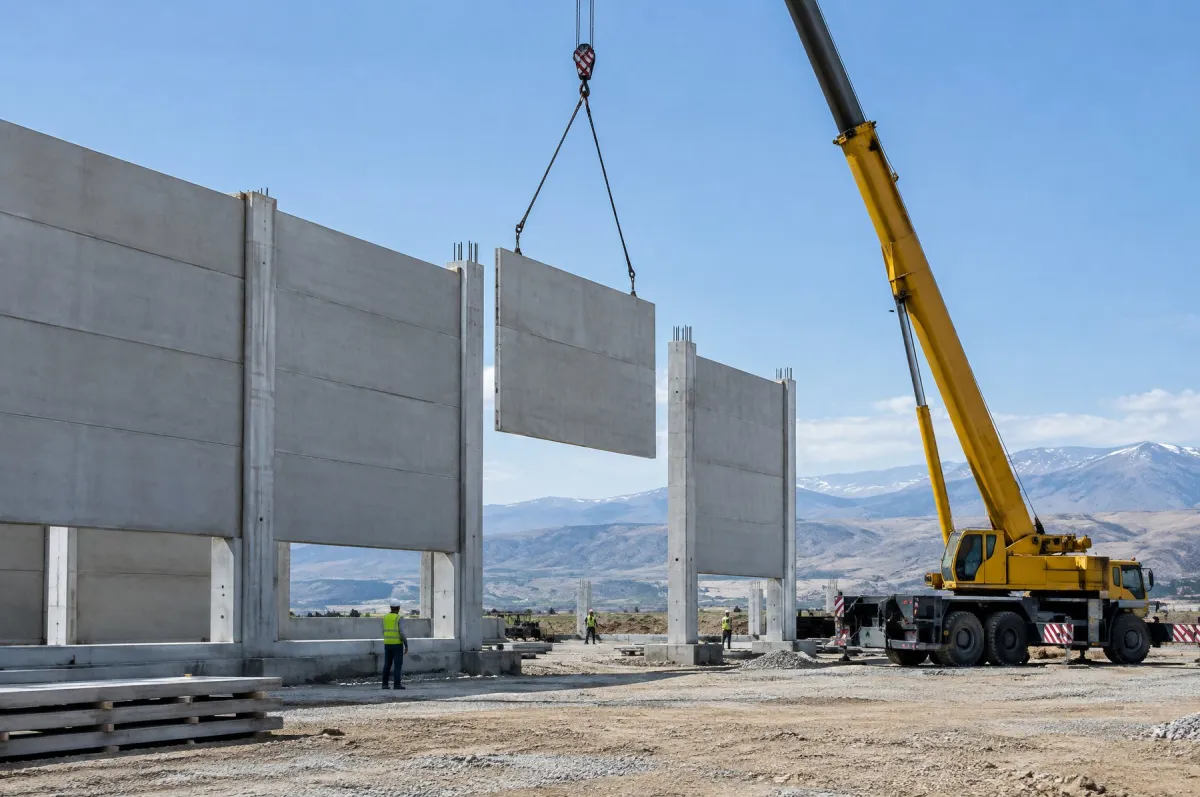
Trough units are delivered to site in stacks. They are laid end to end on a bed along the route that has been compacted or levelled with blinding concrete, and their level and alignment are checked. Once the cables have been pulled in, the lids are closed. Light sections can be placed with small equipment, larger ones by crane or excavator.
Why a precast trough?
Compared with a cast-in-place channel, formwork, concreting and waiting for the concrete to cure are taken off site, and the route is ready in a short time. Units produced in the plant match each other in dimensions and appearance. The concrete body does not corrode and needs no painting, and individual lids can be replaced when necessary.