What is precast concrete street furniture?
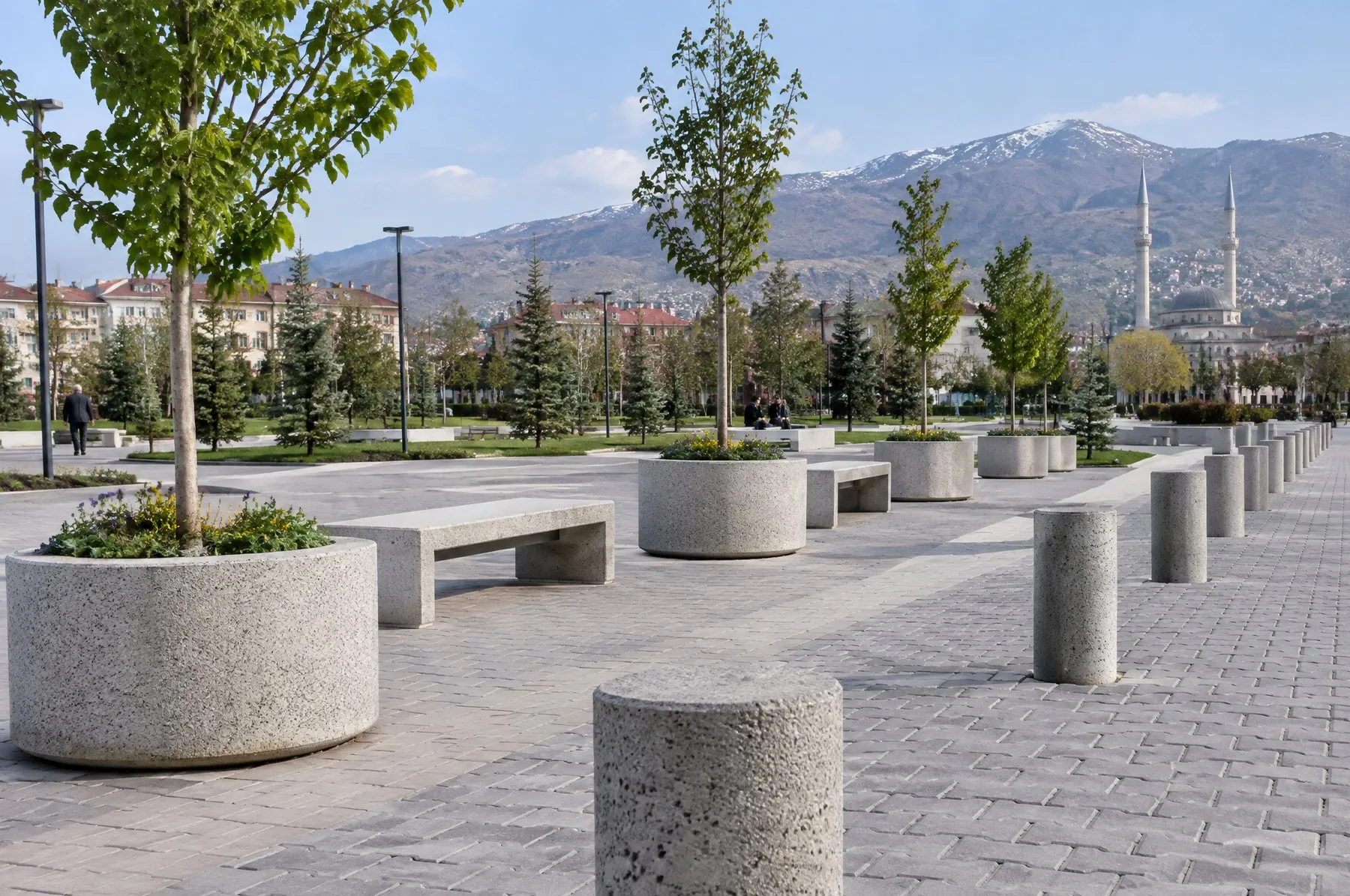
Precast concrete street furniture is a family of concrete units, cast in moulds at the plant, used in public spaces such as parks, squares and streets for seating, planting and organising space. Heavier and tougher than timber or metal alternatives, the pieces stay in place outdoors for a long time.
Its role in the city
Street furniture shapes how an open space is used: benches and tables create places to rest, planters bring greenery onto hard surfaces, and bollards and barrier blocks keep vehicles out of pedestrian areas. Weight is one of the main qualities of concrete furniture; a piece cannot easily be moved or tipped over, and it stands up well to vandalism.
Product range
The range includes benches, picnic and game tables, flower and tree planters, bollards and pedestrian barrier blocks, litter bin surrounds and bases for lighting columns. Units can be made in straight, oval or polygonal forms, with pigmented colour, an exposed aggregate finish or a smooth face. Form, colour and finish are chosen to match the architectural language of the scheme, and the paving, kerbs and furniture in the same space can be designed together.
Production
Street furniture is made by casting a flowable concrete into moulds prepared to give a clean finish on the visible faces. Where needed, reinforcement and fixing parts are placed during casting. Demoulded products are checked for edges and surfaces, and treatments such as washing, sandblasting or a protective impregnation can be applied on request. Plant production makes it easier to keep the same colour and finish across a whole series.
Delivery and placing
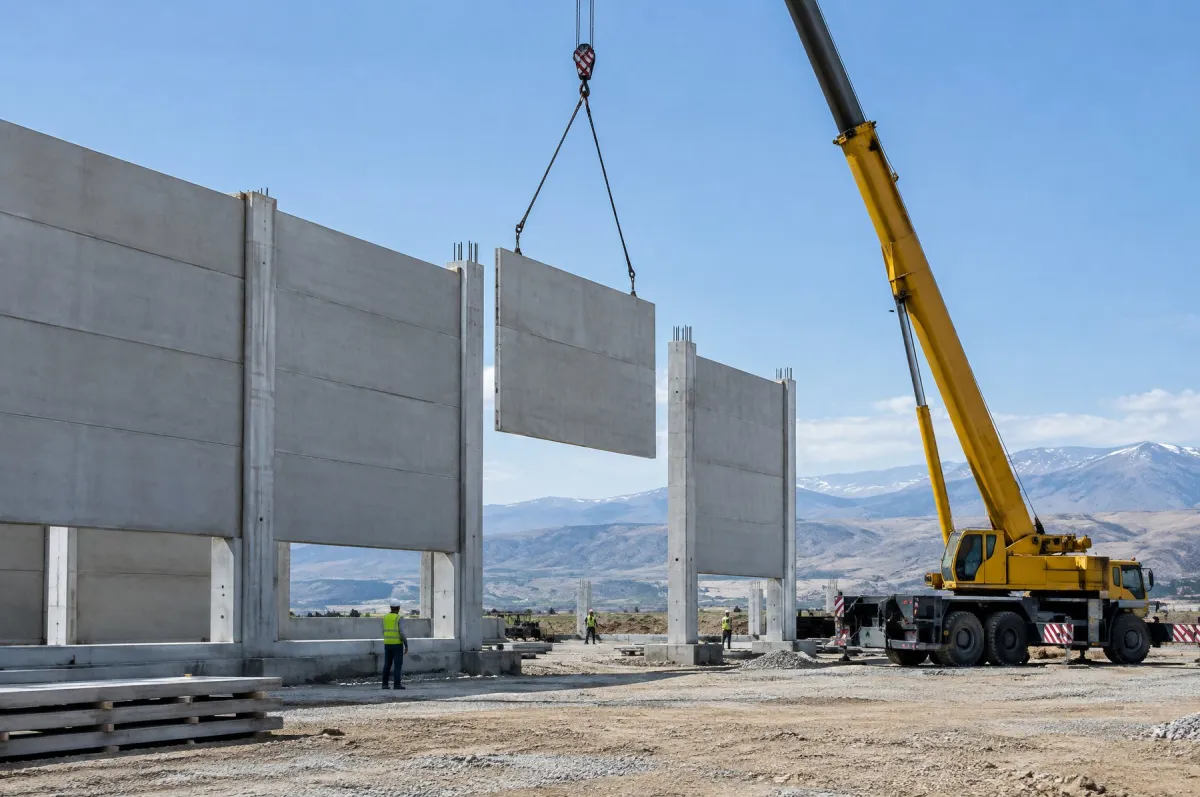
Because of their weight, the units are moved and placed with lorry-mounted cranes or forklifts. Cast-in lifting points or fork pockets are provided for handling. The pieces are set on level, compacted ground and, where necessary, anchored to it. The layout is planned so as not to obstruct pedestrian flow or access for maintenance vehicles.
Planning and coherence
Where street furniture goes depends on how the space is used: benches face shade and views, planters are placed to guide pedestrian flow, and bollards run along the boundaries that vehicles must not cross. Treating the furniture in the same design as the paving, kerbs and drainage of the space keeps levels, colours and finishes consistent and gives the area a coherent appearance.