What is a tunnel lining segment?
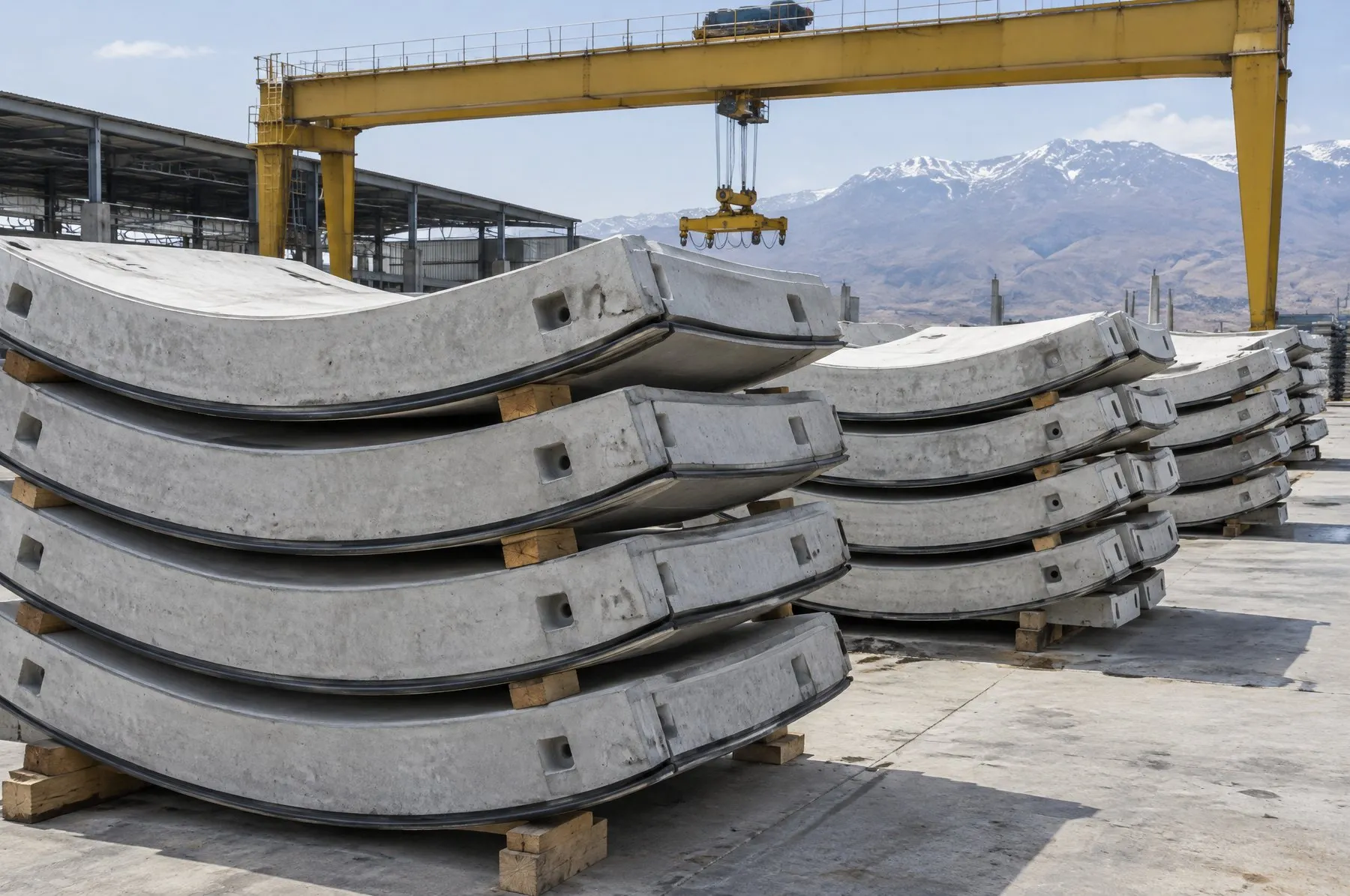
A tunnel lining segment is a curved precast reinforced concrete unit. Several segments, locked together by a smaller key segment, make up one ring of the tunnel, and successive rings form the tunnel's permanent lining.
Where it is used and what it does
Segmental linings are used in tunnels bored by a tunnel boring machine (TBM): metro, railway and road tunnels, sewer and water conveyance tunnels, and energy and utility tunnels. The lining carries the pressure of the surrounding ground and groundwater. The TBM also thrusts against the last ring built in order to advance, so segments are designed to withstand heavy loads from the moment they are installed.
Ring layout and details
The number of segments per ring, the ring width and the lining thickness are set in the design according to tunnel diameter, ground conditions and the TBM design. Rings are made slightly tapered so the lining can follow curves and allow steering corrections; the alignment is followed by rotating each ring as it is built. Segment edges carry gasket grooves for watertightness, holes for bolts or dowels, and lifting points. Reinforcement can be a steel cage, steel fibres or a combination of both.
Production and quality control
Segments are produced in precision-machined steel moulds, since a ring that closes neatly and seals properly calls for dimensional accuracy measured in millimetres. The reinforcement cage is placed in the mould, cast-in parts are positioned and the concrete is compacted by vibration. Controlled curing allows early demoulding. Every segment is checked for dimensions, surface and edges, and building trial rings from early production for inspection is common practice.
Delivery and erection
Segments are stacked in ring order and dispatched to keep pace with tunnel progress. Inside the tunnel, the TBM's erector arm picks up each segment and places it; once the ring has been bolted, the machine moves on to the next push. The gap between the lining and the excavated ground is filled by grouting. Protecting corners and edges during handling and stacking is important to avoid damage to the gasket faces.
Coordinating design and production
Segment production starts before the TBM enters the tunnel and must continue without interruption throughout the drive; running out of rings in stock brings tunnel progress to a halt. The number of moulds, curing time and stockyard space are therefore planned at the outset to match the planned rate of advance. The fit of bought-in parts such as gaskets, bolts and dowels with the segment details is also agreed with the designer and the TBM manufacturer before production begins.